
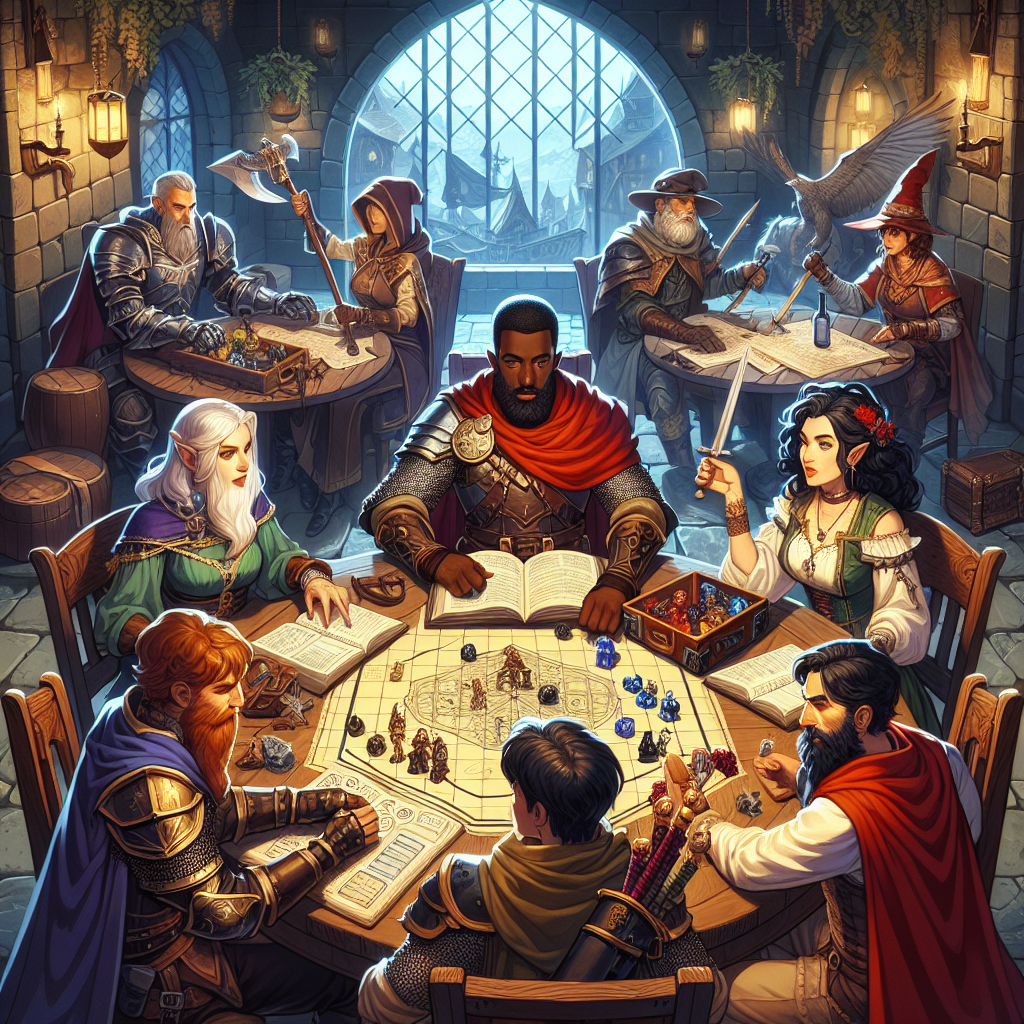
**Mastering the Art of Managing Large Player Groups in Tabletop RPGs**
Tabletop RPGs are a wonderful way to escape reality and dive into a world of fantasy, camaraderie, and creativity. However, managing a group of five or more players can be a daunting task for any Dungeon Master (DM). With more players, the game can become chaotic, but with the right strategies, you can ensure a smooth, enjoyable experience for everyone at the table. In this blog post, we’ll explore seven essential tips for effectively managing large player groups, ensuring every session is memorable for both you and your players.
1. **Establish Clear Communication Channels**
Effective communication is the backbone of any successful RPG session. With a large group, it’s crucial to set clear expectations from the start. Consider using tools like Discord for out-of-game discussions or setting up a dedicated chat for quick in-game queries. Remind players to be respectful of each other’s speaking time, and encourage them to use hand signals to indicate when they have something to add. This structure helps maintain order and ensures everyone feels heard.
2. **Delegate Responsibilities**
Empower your players by assigning roles such as initiative tracker, note-taker, or rules reference. This not only lightens your load as the DM but also keeps players engaged and invested in the game. For instance, appoint a “Lore Keeper” to track important plot points and character arcs, which can be invaluable during lengthy campaigns. By sharing responsibilities, you foster a sense of collaboration and teamwork.
3. **Streamline Combat with Group Initiatives**
Combat can easily bog down a session, especially with more players involved. To keep things moving smoothly, consider using group initiatives. Roll once for each side (players vs. enemies) and let players decide the order of their actions collectively. This method speeds up combat rounds and encourages strategic planning among players, adding a layer of tactical depth to the game.
4. **Use Breakout Sessions for Character Development**
With a large group, individual character development can sometimes fall by the wayside. To address this, schedule occasional one-on-one or small group sessions outside regular game time. These breakout sessions allow for deeper exploration of personal storylines, giving players a chance to shine and develop their characters in meaningful ways.
5. **Implement Clear and Consistent House Rules**
House rules can help tailor the game to your group’s unique dynamics. When dealing with a larger party, consistency is key. Establish rules for ambiguous situations that often arise with many players, such as resolving simultaneous actions or handling player-versus-player interactions. Document these rules and review them periodically to ensure everyone is on the same page.
6. **Balance Spotlight Time**
Ensuring each player has their moment in the spotlight is crucial for group harmony. Plan encounters and story arcs that cater to different character strengths and backstories. For example, if one player is particularly adept at diplomacy, design a scenario where negotiations are key. Rotate focus regularly so every player feels valued and engaged, maintaining a balanced and inclusive game atmosphere.
7. **Embrace Flexibility and Improvise**
With more players, unpredictability is inevitable. Embrace the chaos and be ready to improvise when plans go awry. If a session veers off course, use it as an opportunity to explore new plot threads or character dynamics. Flexibility not only keeps the game exciting but also encourages players to think creatively and contribute to the story’s evolution.
In conclusion, managing a tabletop RPG session with five or more players is no small feat, but with these strategies, you can create a harmonious and engaging environment where every player feels involved. Remember, the heart of RPGs lies in storytelling and collaboration, so embrace the challenges and enjoy the shared journey with your adventuring party. How do you plan to implement these tips in your next game session? Share your thoughts and experiences in the comments below!