
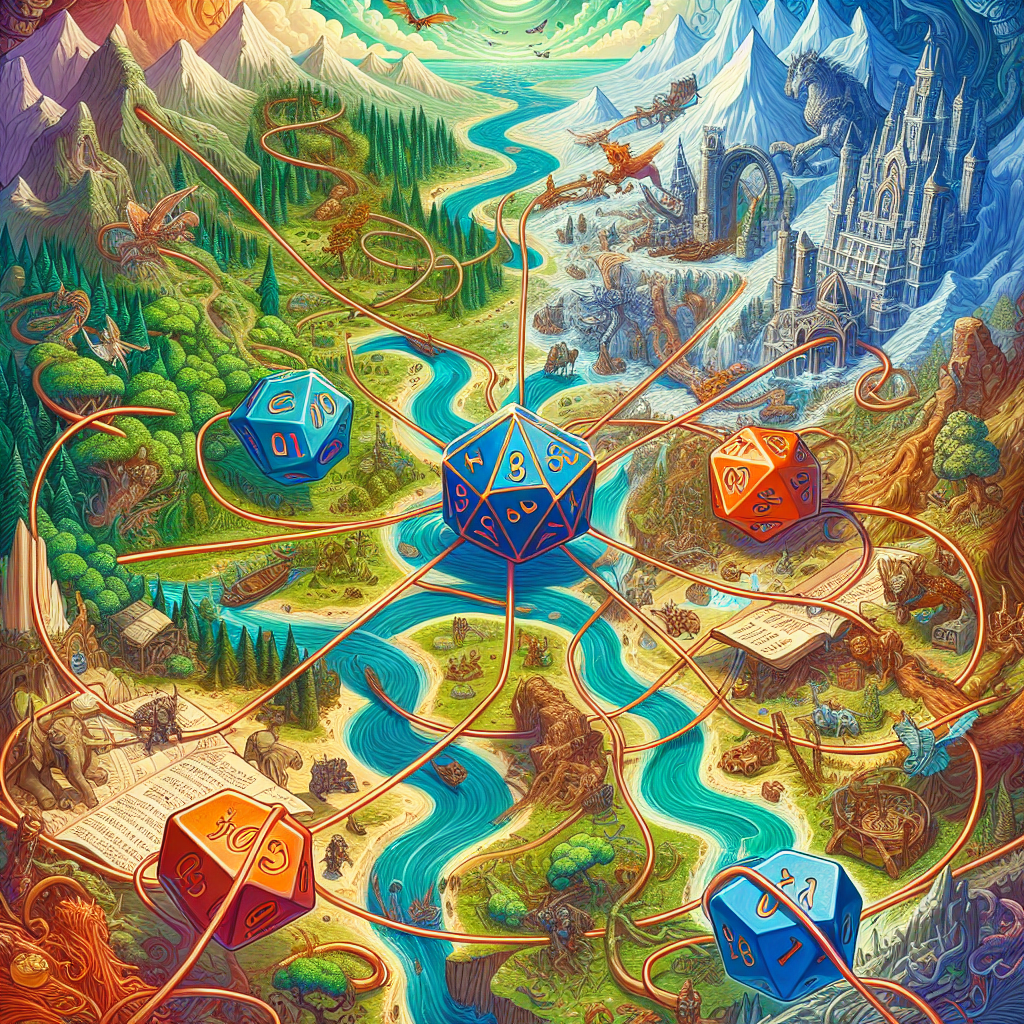
# How Geography Shapes Storytelling in TTRPGs
In the realm of tabletop role-playing games (TTRPGs), the geography of your campaign world is more than just a backdrop—it’s a dynamic character in its own right. The landscapes, climates, and terrain your adventurers traverse can deeply influence the narrative, offering unique challenges and opportunities for storytelling. For Dungeon Masters (DMs) and players alike, understanding how geography can shape your campaign is key to creating immersive and memorable adventures.
## 1. **Environmental Challenges and Opportunities**
Geography isn’t just about where things are; it’s about how those locations affect your characters. Rugged mountains, dense forests, and vast deserts each present unique challenges and opportunities. For instance, imagine a campaign where a party must traverse a treacherous mountain range to reach a hidden monastery. The harsh, cold environment could lead to encounters with avalanches or mountain-dwelling creatures, while offering a chance to discover secret paths or ancient ruins. Geography can dictate the pace and tone of the adventure, turning travel into a thrilling part of the narrative.
## 2. **Cultural and Political Influences**
The geography of a land often shapes its cultures and political landscapes. Coastal cities may thrive on trade and be more cosmopolitan, whereas isolated villages in the highlands might develop unique customs and dialects. For example, a campaign set in a world divided by a massive river could feature two rival kingdoms on either side, each with distinct cultures shaped by their environment. This geographic division can drive conflict, diplomacy, and quests, adding depth to your world-building and character interactions.
## 3. **Mythology and Local Lore**
Geography can give rise to myths and legends that enrich your story. Ancient forests might be home to legendary creatures, while a volcanic island could be the site of a god’s wrath. Utilize local geography to weave tales that captivate your players. Perhaps the characters hear of a mysterious lake where a ghostly ship appears on foggy nights, luring sailors to their doom. These geographic tales can serve as plot hooks, side quests, or background lore that deepen the world your players explore.
## 4. **Strategic and Tactical Considerations**
Geography also plays a crucial role in strategy and tactics, both for players and their adversaries. A battle in a dense forest will differ significantly from one on an open plain. Encourage players to think creatively about how they can use the environment to their advantage. For example, during a siege, they might discover a hidden pass through the mountains or use the tides to time an assault on a coastal fort. Geography can turn the tide of battle, making it an essential tool for clever strategists.
Geography in TTRPGs is not just a map; it’s a living tapestry that influences every aspect of your campaign. By thoughtfully integrating geography into your storytelling, you can create richer, more engaging worlds that captivate your players. How will you leverage the power of geography in your next adventure? Share your thoughts and stories in the comments below!