
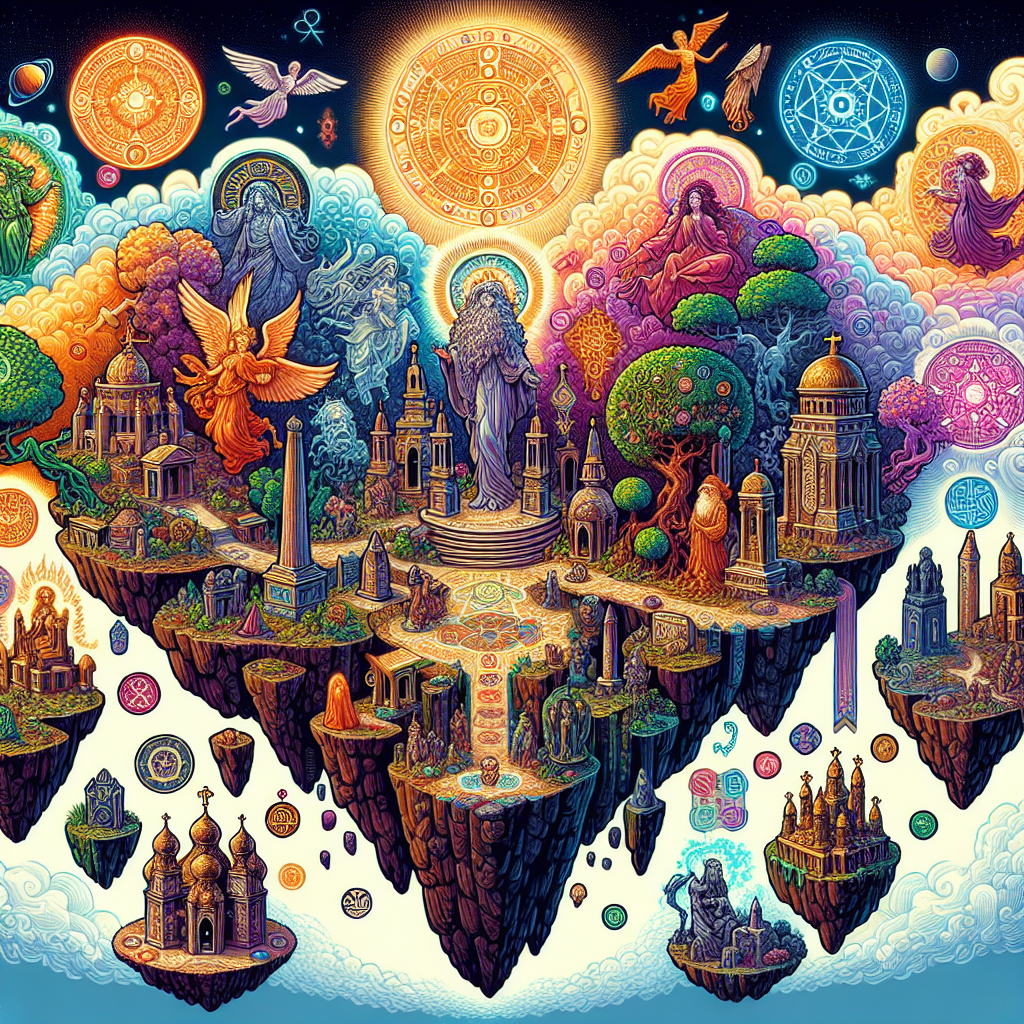
**Designing Religions and Deities for Your Campaign: Bringing Depth and Flavor to Your Fantasy World**
In the realm of tabletop RPGs, the creation of religions and deities can offer a rich tapestry of lore and intrigue, adding depth to your campaign world that both Dungeon Masters (DMs) and players can delight in exploring. These elements can influence character motivations, shape societal norms, and provide unique plot hooks, making them essential tools in a DM’s repertoire. Whether you’re revamping existing pantheons or crafting entirely new religious landscapes, these seven tips will help you create compelling and immersive spiritual frameworks for your players to engage with.
1. **Map Out the Pantheon**
– Start by deciding the scope of your pantheon. Consider whether you want a monotheistic, polytheistic, or animistic system. A polytheistic setup, like that of the Greek or Norse gods, allows for a diverse range of deities, each with unique domains and personalities. A monotheistic system, on the other hand, could center around a singular, all-encompassing deity, offering a different kind of narrative focus. Define the hierarchy and interrelationships between these divine beings to provide a coherent structure for your players to understand.
2. **Define Domains and Portfolios**
– Each deity should have specific domains or portfolios that they oversee. These can include elements like war, love, harvest, or even more abstract concepts like time and fate. Domains not only give your deities distinct identities but also influence the kind of followers they attract. For instance, a deity of war might be revered by soldiers and strategists, while a god of harvests might be worshipped by farmers and traders. Clearly defined domains help players connect with the world and can inspire character backstories and motivations.
3. **Incorporate Cultural Influences**
– Religions often reflect the cultures that worship them. Consider drawing inspiration from real-world cultures to create a religion that feels authentic and nuanced. Think about how the geography, history, and societal values of your campaign world shape its religious practices. For example, a seafaring culture might worship a pantheon dominated by sea gods and goddesses, whereas a desert-dwelling civilization might revere deities associated with the sun and survival.
4. **Create Rituals and Traditions**
– Rituals and traditions are the lifeblood of religion, providing a tangible way for characters to express their faith. Design ceremonies that are specific to each deity and reflect their domains and personality. These could range from grand festivals to solemn rites of passage. For example, a festival honoring a sun god might feature day-long celebrations culminating in a large bonfire, symbolizing the deity’s radiant power. Rituals are excellent opportunities for roleplay and can serve as meaningful plot points in your campaign.
5. **Develop Myths and Stories**
– Myths are powerful storytelling tools that can elucidate the values and beliefs of a religion. Create a series of tales that explain the origins of the deities, their exploits, and their relationships with each other and the world. These stories can be as grand as the epic poems of old or as simple as parables with moral lessons. Myths not only enrich the lore of your world but also provide narrative hooks and inspiration for quests and adventures.
6. **Establish Religious Factions and Conflicts**
– Religion is rarely monolithic. Within any faith, there can be numerous sects and factions, each interpreting doctrine differently. These differing viewpoints can lead to alliances or conflicts, both within and between religions. For instance, a reformist sect might challenge the traditional practices of an established church, leading to political intrigue and potential upheaval. Conflicts provide dynamic storytelling opportunities and can be central to your campaign’s plot.
7. **Incorporate Divine Interactions**
– Consider how the gods interact with the world and its inhabitants. Are they distant, enigmatic figures who rarely intervene, or do they take an active role in mortal affairs? Divine interventions can range from subtle omens and visions to direct manifestations and miracles. The way deities interact with the world can greatly affect how they are perceived and worshipped by their followers, adding layers of complexity to your campaign’s religious landscape.
By thoughtfully designing religions and deities, you can create a vibrant and immersive world that captivates and challenges your players. Each god, ritual, and myth adds a new dimension to your campaign, enriching the narrative and providing endless possibilities for adventure. As you embark on this creative endeavor, consider how your players might interact with these spiritual elements. How will your campaign’s deities shape your world, and how will your players choose to engage with these divine beings? Share your thoughts and experiences in the comments below!