
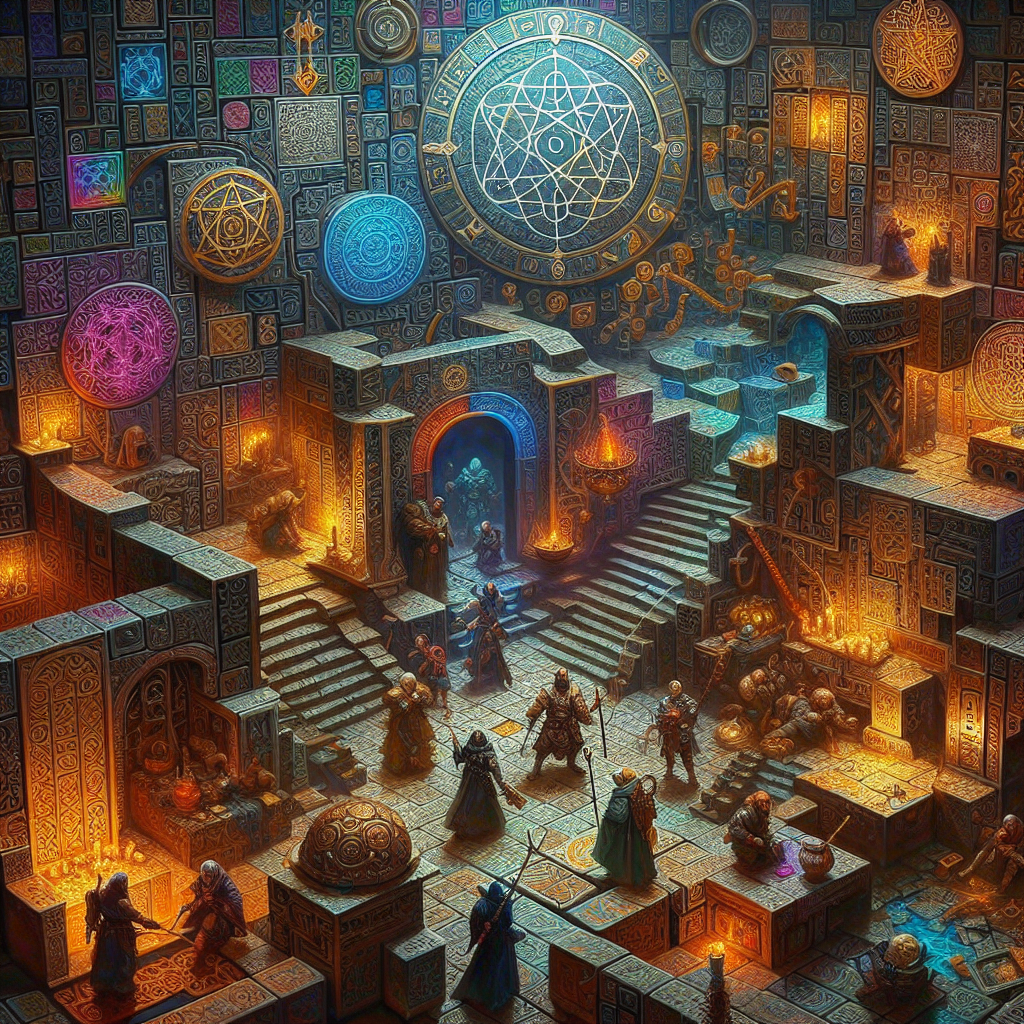
# Designing Dungeons for Puzzle-Solving: A Guide for Tabletop RPG Enthusiasts
Dungeons and Dragons and other tabletop RPGs are all about weaving intricate stories, creating memorable characters, and constructing immersive worlds. A particularly rewarding aspect for Dungeon Masters (DMs) and players alike is the art of puzzle-solving within dungeons. Puzzles can transform a simple crawl into a thrilling mental exercise, offering players the chance to flex their intellectual muscles while adding layers of intrigue to the campaign. This guide will explore nine essential tips for designing engaging, challenging, and rewarding puzzles in your RPG dungeons.
1. **Start with the Story**
Before diving into the mechanics, consider how the puzzle fits within your dungeon’s narrative. Is it a riddle guarding an ancient treasure? Or perhaps a series of levers maintaining a magical barrier? Grounding puzzles in the story adds depth and context, making the experience more immersive. For example, a door sealed with a riddle in a long-abandoned wizard’s tower might require knowledge of the wizard’s history to solve.
2. **Vary the Puzzle Types**
Keep your players engaged by offering a variety of puzzle types. Mix logic puzzles with physical challenges, such as balancing weights on a scale or navigating a maze of shifting walls. This variety ensures that different player strengths are highlighted and keeps the dungeon experience fresh and exciting.
3. **Balance Difficulty**
Striking the right difficulty level is crucial. Too easy, and players feel unchallenged; too hard, and frustration can set in. Consider the experience level of your group and adjust accordingly. Providing subtle hints or a mechanism for players to earn clues can help maintain flow without diminishing the challenge.
4. **Integrate the Environment**
Use the dungeon’s environment to your advantage. Elements like light, sound, and even temperature can be integral to puzzle design. For instance, a puzzle might involve aligning mirrors to reflect light and reveal a hidden passage, or deciphering a melody played by enchanted instruments that opens a secret door.
5. **Encourage Teamwork**
Design puzzles that require collaboration. This not only strengthens the party’s dynamic but also allows everyone to contribute. A classic example is a puzzle that involves multiple pressure plates needing simultaneous activation, promoting communication and coordination among players.
6. **Use NPCs Wisely**
Non-player characters (NPCs) can be allies or obstacles in puzzle-solving. An NPC might provide crucial hints or hold vital information. Alternatively, a mischievous imp could present players with riddles, offering rewards for correct answers or penalties for failures, adding an extra layer of tension to the situation.
7. **Incorporate Magic**
Magic is a cornerstone of fantasy RPGs, so why not include it in your puzzles? A magical lock that requires a spell to open or a room that shifts dimensions can add a fantastical element. Consider incorporating spells or magical artifacts that players have acquired, ensuring they feel their character development is meaningful.
8. **Test Your Puzzle**
Before introducing a puzzle into your campaign, test it. Whether you recruit fellow DMs or friends, a test run can reveal potential pitfalls or areas of confusion. It also provides you with insights on pacing and how players might approach the challenge, allowing you to tweak it for optimal engagement.
9. **Reward the Players**
Successful puzzle-solving should come with rewards, whether in the form of treasure, experience points, or narrative progress. Ensure that the payoff matches the effort, enhancing players’ sense of accomplishment. A cleverly solved puzzle might reveal a shortcut to the dungeon’s boss or an ancient artifact crucial to the campaign’s plot.
Incorporating puzzles into your RPG dungeons can elevate your campaign to new heights, offering players an engaging blend of storytelling, strategy, and creativity. By following these guidelines, you can craft puzzles that challenge, entertain, and reward your adventurers. How have you incorporated puzzles into your dungeons, and what tips would you add for fellow DMs? Share your thoughts and experiences in the comments below!