
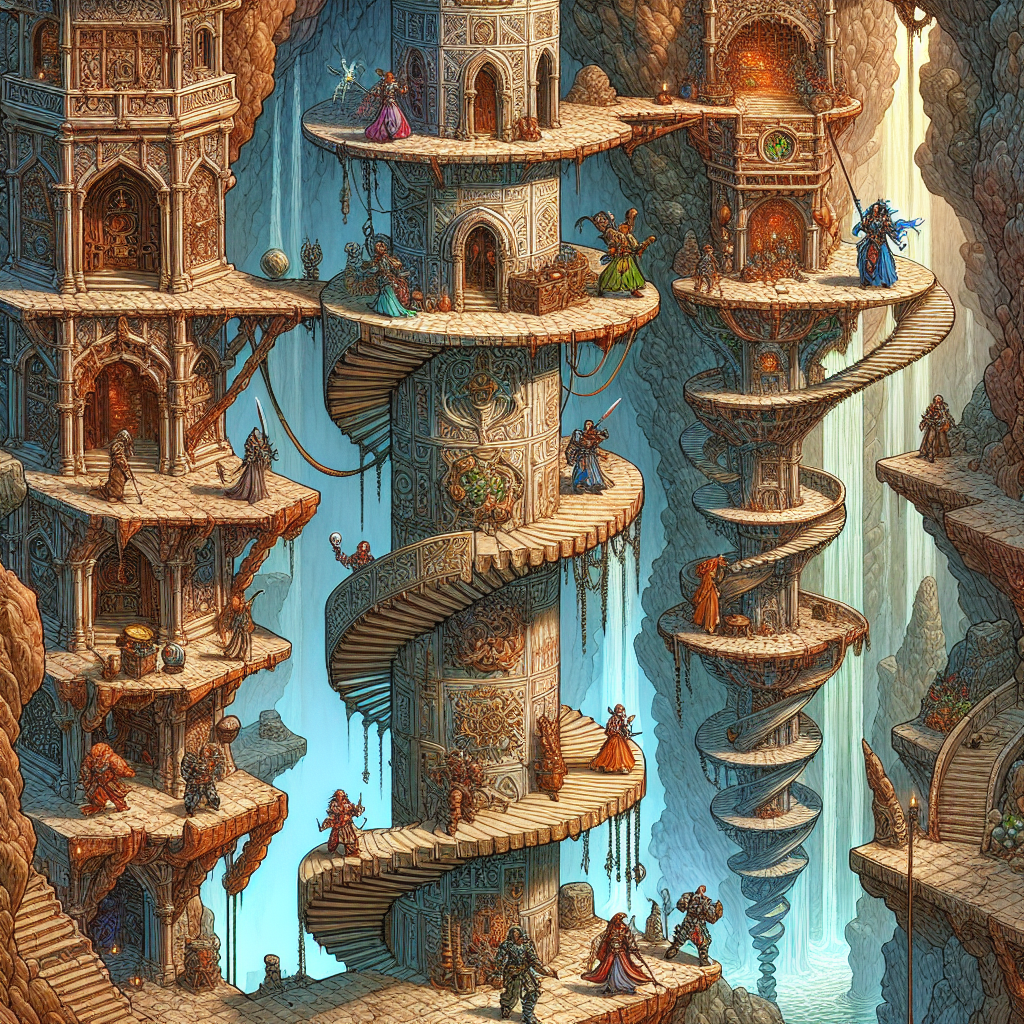
## Elevate Your Game: Using Verticality in Your Dungeons
When crafting memorable adventures for tabletop RPGs, Dungeon Masters (DMs) often focus on the horizontal layout of their dungeons, filling them with winding corridors, hidden rooms, and treacherous traps. However, the often-overlooked element of verticality can add a whole new dimension to your gaming experience. By thinking vertically, you can create more dynamic, engaging, and challenging environments that will captivate your players and enrich your storytelling. Here are five creative ways to incorporate verticality into your dungeons.
1. **Multi-Level Challenges: Layer Your Adventure**
One way to introduce verticality is by designing multi-level challenges that require players to think in three dimensions. For instance, consider a tower with several floors, each hosting a different type of encounter—ranging from combat to puzzles. The party might need to navigate a spiraling staircase while evading traps or dealing with foes positioned on higher levels. This setup encourages strategic thinking and resource management, as players decide whether to split the party or tackle challenges one floor at a time.
2. **Dynamic Terrain: Use Height to Your Advantage**
Incorporating varied terrain, such as cliffs, ledges, and platforms, can dramatically shift the dynamics of an encounter. Imagine a battle in a cavern with towering stalagmites and a chasm dividing the room. Players could use climbing equipment or spells to gain advantageous positions, turning the height difference into a tactical asset. This not only adds an exciting twist to combat but also encourages creative problem-solving and teamwork.
3. **Vertical Movement Mechanics: Climb, Fly, or Fall**
Introduce mechanics that allow or require characters to move vertically. Spells like “Fly” or “Levitate” open up new tactical possibilities, while climbing checks can add tension. You might feature a dungeon room where the floor is slowly flooding, compelling players to find ways to ascend to safety. Alternatively, a hidden treasure might be located atop a seemingly inaccessible ledge, challenging players to devise a plan to reach it. These scenarios can make every movement decision feel impactful and strategic.
4. **Environmental Storytelling: Tell a Story with the Scenery**
Verticality can be a storytelling tool as well. Consider a ruined castle where the upper floors have collapsed, leaving precarious walkways and dangling chandeliers. Each level can tell a part of the story—perhaps the higher up the players go, the more they uncover about the castle’s tragic past. Vertical exploration can reveal layers of history, secrets, and lore that enrich the narrative and deepen player engagement.
5. **Vertical Puzzles: Challenge the Mind as Well as the Body**
Puzzles that involve vertical elements can add an intellectual challenge to your game. Imagine a room with a series of floating platforms that need to be activated in the correct sequence to form a bridge. Or consider a vertical maze where players must ascend, descend, and navigate through multiple levels to find the exit. These puzzles can be tailored to your party’s skill level and add an exciting mental challenge to complement physical exploration.
Incorporating verticality in your dungeons can transform your tabletop RPG sessions into multi-dimensional adventures. By challenging your players to think beyond the flat, horizontal plane, you can create richer, more immersive experiences. How do you plan to use verticality in your next adventure? Share your thoughts and ideas in the comments below, and let’s elevate our campaigns together!