
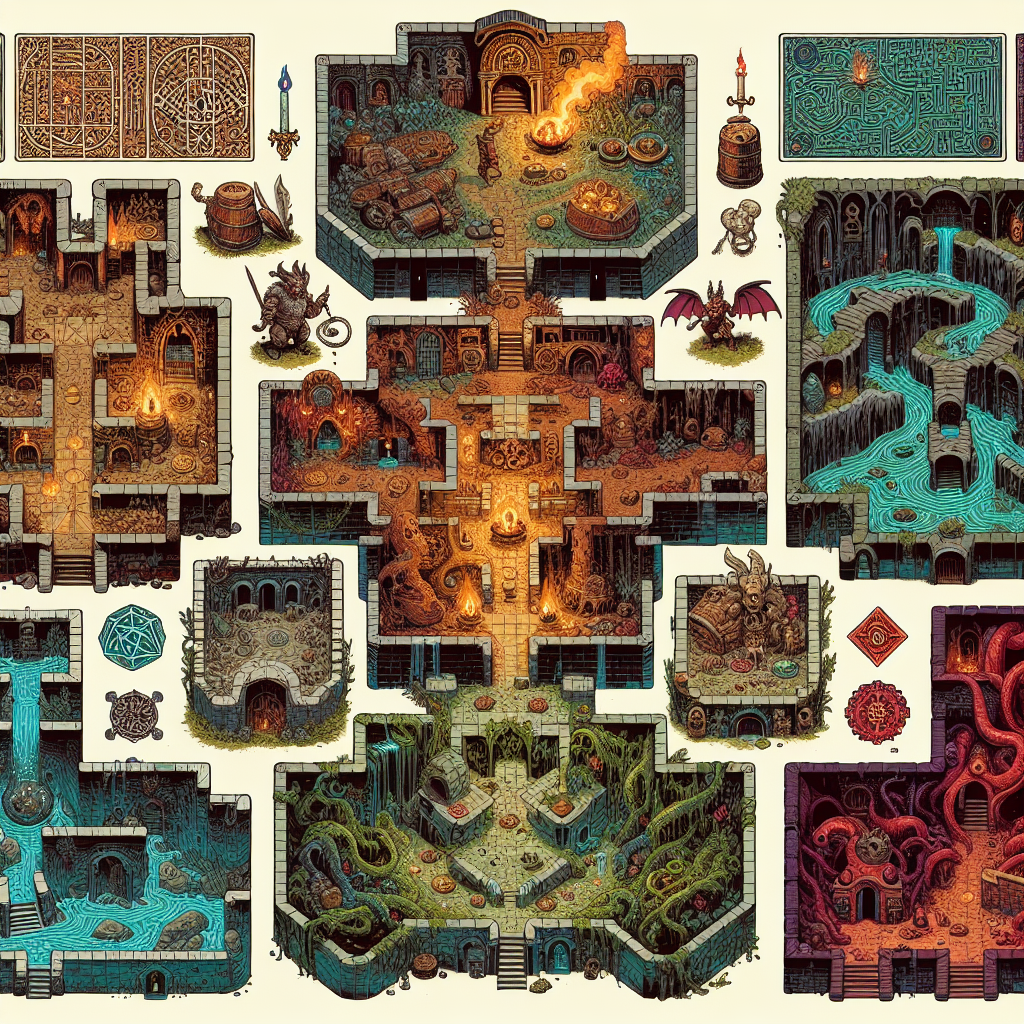
Title: 5 Dungeon Layouts That Encourage Exploration for Your Next Tabletop RPG Adventure
As a Dungeon Master (DM), one of your primary goals is to create an immersive and engaging experience for your players. A well-crafted dungeon layout is essential for encouraging exploration, sparking curiosity, and keeping players on their toes. In this post, we’ll delve into five innovative dungeon layouts that will not only captivate your players but also enhance the storytelling aspect of your campaign. So, let’s dive into these exciting designs that will elevate your tabletop RPG adventures.
### 1. **The Labyrinthine Maze**
Nothing screams exploration like a classic labyrinth. This layout is all about twisting corridors, dead ends, and secret passages. The key to a successful labyrinth is variety—mix in traps, puzzles, and hidden treasures to keep your players engaged. For example, consider placing a riddle at each fork, where choosing the wrong path could lead to danger or a hidden gem. This layout encourages players to map out their journey, fostering teamwork and critical thinking as they work together to navigate through the maze.
### 2. **The Vertical Dungeon**
Most dungeons are sprawling, horizontal affairs, but a vertical dungeon flips that concept on its head—literally. Imagine a multi-level tower or an underground cavern that descends deep into the earth. Each level presents unique challenges and environments, from a fiery forge filled with magma creatures to a treacherous ice cavern. This layout encourages players to think in three dimensions, utilizing spells, equipment, or creative problem-solving to ascend or descend. The vertical dungeon offers a refreshing change of pace and a new perspective on exploration.
### 3. **The Living Dungeon**
In a living dungeon, the environment itself is a character, constantly shifting and changing. This layout is perfect for DMs who love dynamic storytelling and want to surprise their players. Imagine a forest that reshapes itself every hour or a castle with walls that move and stairs that lead to different places each day. Players must remain vigilant, adapt to new situations, and perhaps even communicate with the dungeon to uncover its mysteries. This ever-changing environment keeps exploration unpredictable and thrilling.
### 4. **The Hub-and-Spoke Design**
A hub-and-spoke layout centers around a central “hub” area, with multiple “spokes” or paths branching out. This design allows players to explore different sections of the dungeon at their own pace, returning to the hub to rest or regroup. Each spoke can have its own theme or challenge—perhaps one path leads to a library filled with ancient tomes, while another descends into a dark crypt. This layout encourages exploration by offering players choices and the freedom to tackle challenges in the order they prefer.
### 5. **The Puzzle-Box Dungeon**
For players who love solving puzzles, a puzzle-box dungeon is an ideal choice. This layout is designed around interconnected puzzles that must be solved to progress. Each room or area presents a unique challenge—ranging from logic puzzles and magical enigmas to physical obstacles that require teamwork to overcome. As players solve each puzzle, they unlock new areas and reveal more of the dungeon’s secrets. This type of dungeon not only encourages exploration but also promotes collaboration and creative thinking.
Incorporating these layouts into your tabletop RPG sessions can transform your dungeons into vibrant, engaging environments that your players will love to explore. Whether it’s the mind-bending paths of a labyrinth or the ever-shifting rooms of a living dungeon, each design offers its own unique challenges and opportunities for storytelling.
How would you use these layouts in your next campaign? Share your thoughts and ideas in the comments below—your fellow DMs and players would love to hear your creative twists!