
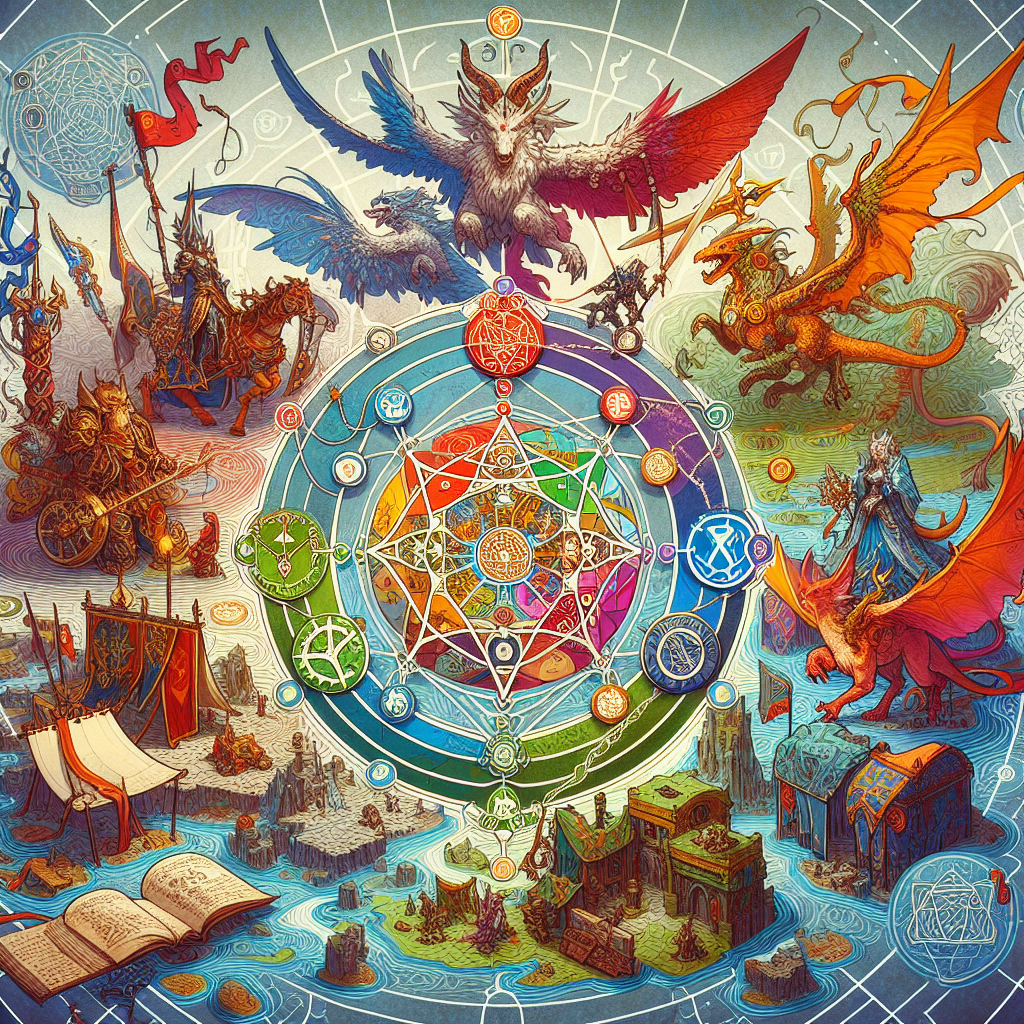
**Creating Factions That Influence the Game World: A Guide for Tabletop RPG Enthusiasts**
In the vibrant tapestry of a tabletop RPG, factions serve as the dynamic threads that weave together the narrative, offering Dungeon Masters (DMs) and players alike a rich playground of intrigue, alliances, and conflicts. Crafting compelling factions not only enhances world-building but also creates an immersive experience where players can engage with complex political landscapes and shifting power dynamics. For DMs, incorporating factions provides a powerful tool for driving plotlines and character development, while players gain endless opportunities for role-playing and strategic decision-making. Let’s delve into six essential strategies for creating influential factions that will elevate your game world.
**1. Establish Clear Goals and Motivations**
Every faction must have a purpose that drives its actions within the game world. Whether it’s the pursuit of power, wealth, knowledge, or peace, clearly defined goals provide a foundation for how a faction interacts with other entities. For example, a secretive guild of mages might seek lost arcane artifacts to prevent a looming catastrophe, creating a narrative thread that players may choose to unravel or support.
**2. Develop Distinctive Culture and Identity**
Factions are more than just their goals; they are communities with unique cultures, traditions, and identities. Consider the aesthetics, language, rituals, and values that set a faction apart. A nomadic tribe that reveres nature spirits, for instance, might have a deep connection to the land, using natural motifs in their attire and ceremonial practices, which can influence how they are perceived and interacted with by other factions.
**3. Create a Hierarchical Structure**
Understanding the internal structure of a faction adds depth and realism. Who are the leaders, and how is power distributed? Is there a council, a singular ruler, or a democratic assembly? Highlighting different roles within a faction can offer players avenues for interaction, from negotiating with a faction leader to dealing with rebellious subordinates. Consider a mercenary band with a charismatic leader and a council of war veterans, each with their own agendas and loyalties.
**4. Define Relationships with Other Factions**
Factions rarely exist in isolation. Mapping out alliances, rivalries, and neutral stances with other factions can create a dynamic and ever-evolving political landscape. For example, a faction of dwarven smiths might be allies with a human kingdom due to a shared trade agreement, but have a long-standing feud with an elven enclave over territorial disputes. These relationships can serve as catalysts for player-driven stories and quests.
**5. Integrate Player Characters into Faction Dynamics**
To make factions truly impactful, consider how they relate to the player characters. Offer opportunities for players to join, influence, or oppose factions based on their characters’ backgrounds and choices. Perhaps a player character’s past with a thieves’ guild offers a unique leverage point in negotiations, or their noble lineage grants them an audience with a ruling council. By integrating players into faction dynamics, you empower them to shape the game world actively.
**6. Evolve Factions Over Time**
A stagnant faction quickly loses intrigue. Allow factions to grow, change, and react to player actions and world events. Maybe a faction’s leadership changes due to an internal coup, or their goals shift in response to a new threat. This evolution not only keeps the game world lively and unpredictable but also encourages players to stay engaged with the unfolding plotlines.
As you embark on the journey of creating factions that deeply influence your game world, remember that their true power lies in the stories they help tell. How do you envision factions impacting your current or future campaigns? Share your thoughts and experiences in the comments below, and let’s explore the endless possibilities together!