
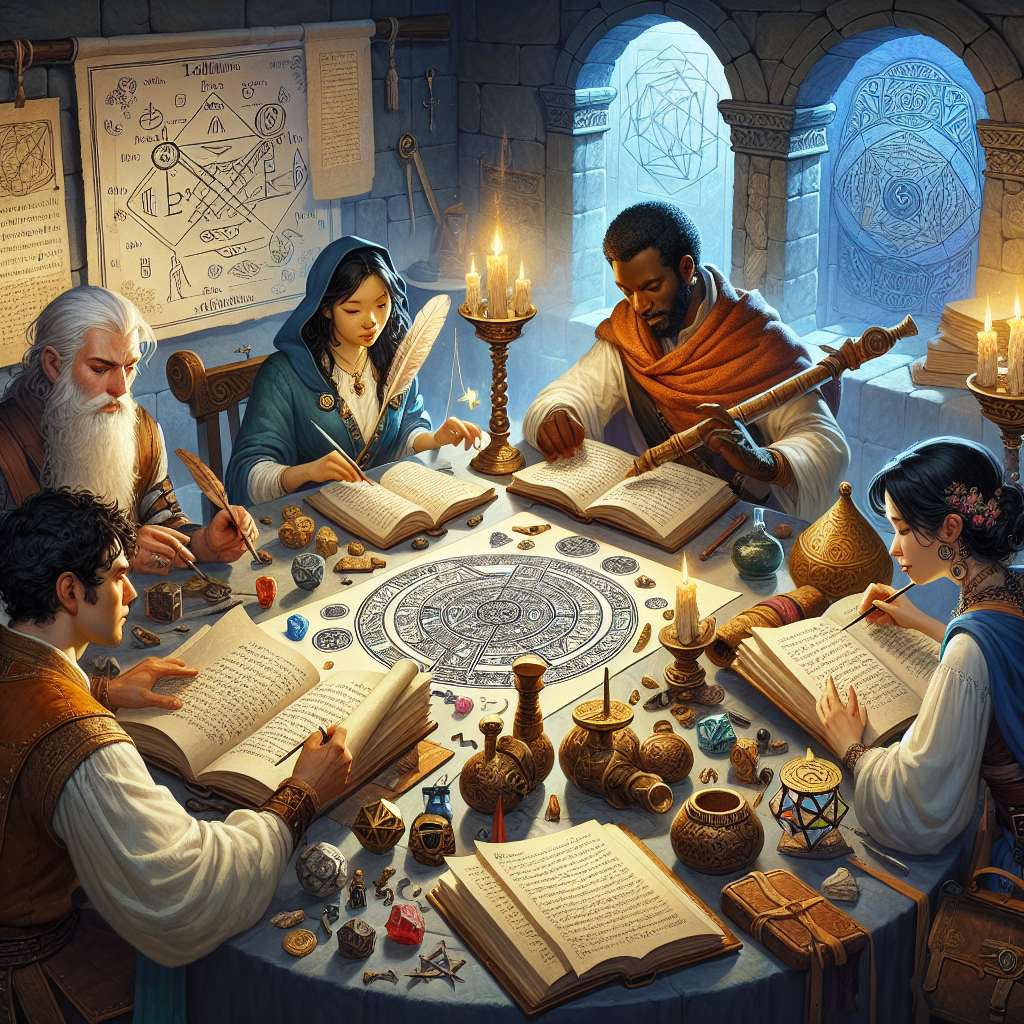
### Building Cultures: Languages, Laws, and Lore in Tabletop RPGs
Creating rich, immersive cultures in tabletop RPGs can be the difference between a campaign that feels like a generic fantasy setting and one that transports players to another world. For Dungeon Masters (DMs) and players alike, understanding how to weave languages, laws, and lore into your game can deepen engagement and provide endless opportunities for storytelling. Let’s explore how you can craft cultures that captivate and inspire your RPG experiences.
1. **Crafting Compelling Languages**
Language is more than a means of communication; it’s a gateway into culture. When developing a new culture, consider constructing a unique language or dialect that reflects its people’s history and values. You don’t need to become a linguist—simple phrases, idioms, and naming conventions can add depth. For instance, a seafaring culture might have numerous words for ocean conditions, reflecting their intimate relationship with the sea. Including language quirks, like a reverence for silence, can further flesh out cultural norms. Encourage players to learn or use these languages for in-game benefits, adding an extra layer of immersion.
2. **Establishing Intricate Laws**
Laws are the backbone of any society, dictating what is permissible and what is taboo. When creating laws for your RPG culture, consider what values are most important to its people. Is honor held above all, or is personal freedom paramount? Perhaps magic is tightly regulated to prevent misuse, or maybe trade is unrestricted to promote prosperity. For example, a culture might have a law that every duel must be overseen by a council of elders, emphasizing the importance of community and fairness. These laws can drive plot points, create conflict, and offer players moral dilemmas to navigate.
3. **Developing Deep Lore**
Lore is the tapestry of stories, myths, and histories that define a culture. It not only informs the present-day beliefs and practices of a society but can also serve as a narrative tool for DMs. To create engaging lore, consider what legends or historical events have shaped your culture. Did a mythical hero slay a dragon to protect the realm, or was there a great schism that divided the people? Share these tales with players through ancient texts, oral traditions, or forgotten ruins. This deep lore can provide hooks for quests and reveal insights into the motivations of the culture’s inhabitants.
4. **Integrating Cultural Practices and Rituals**
Cultural practices and rituals are vital for bringing a society to life. These can range from daily routines to grand ceremonies and often reveal what a culture cherishes. Think about how your culture celebrates life events like births, marriages, or deaths. Perhaps a society honors their ancestors through annual festivals or has a unique coming-of-age ceremony involving a test of bravery. For example, a culture living in harmony with nature might have a ritual where they plant a tree for every newborn child. These practices can offer players a deeper understanding of the culture and provide opportunities for character development and interaction.
In conclusion, building cultures with distinct languages, laws, and lore can transform your tabletop RPG campaign into a vibrant, living world. By thoughtfully crafting these elements, you invite players to explore and engage with the setting on a deeper level. Now, how will you use these ideas to enrich your next campaign? Share your thoughts and cultural creations in the comments below—we’d love to hear about your unique worlds!