
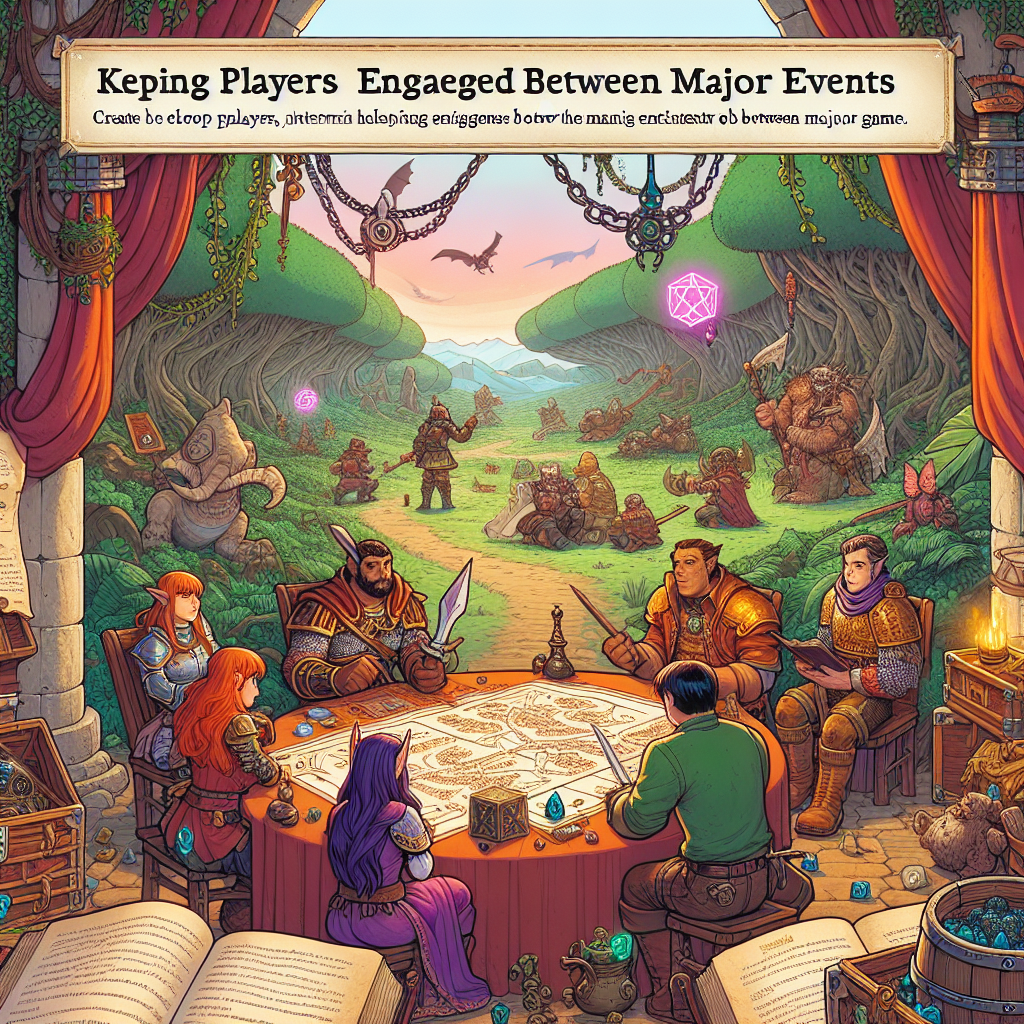
### Keeping Players Engaged Between Major Events in Tabletop RPGs
In the world of tabletop RPGs, maintaining player engagement between major plot points can be as crucial as the epic battles and dramatic unveilings themselves. For Dungeon Masters (DMs), it’s an art form to keep the adventure alive during the quieter moments, ensuring that players remain invested and immersed in the story. This is essential not only for the continuity of the game but also for fostering a dynamic and enjoyable experience for everyone involved. Below, we explore nine inventive ways to keep your players engaged between those big, memorable events.
1. **Create Intriguing Side Quests**
– Side quests are a fantastic way to keep your players engaged. These mini-adventures can develop character backstories, explore lesser-known areas of the world, or introduce new NPCs. Consider the mysterious merchant in the market who needs help recovering a stolen artifact, or a haunted forest that whispers secrets to those who dare enter. These quests can offer rewards that tie back into the main storyline, ensuring they feel meaningful.
2. **Develop Rich NPC Interactions**
– Non-player characters (NPCs) are the lifeblood of your campaign world. Use them to introduce subplots or personal challenges for the characters. Perhaps a friendly innkeeper has a secret past that intertwines with a character’s history or a rival adventurer group that offers opportunities for competitive quests. NPCs with depth can transform mundane interactions into memorable experiences.
3. **Incorporate Character Development Sessions**
– Dedicate sessions to explore the personal growth of each character. This could be in the form of flashbacks, visions, or personal challenges. For example, a warrior might face a trial from their deity to prove their worth, or a rogue might have to confront their past to save a loved one. These moments deepen the player’s connection to their character and the story.
4. **Use World-Building Elements**
– Keep your players engaged by revealing snippets of the world’s history, geography, or culture. Introduce ancient ruins that whisper tales of past civilizations or a festival that gives insight into local customs. These elements can spark curiosity and lead to player-driven exploration, adding layers to your world and its inhabitants.
5. **Introduce Player-Driven Goals**
– Encourage players to set personal goals for their characters that align with the overarching campaign. Whether it’s mastering a new skill, collecting rare items, or building a stronghold, these goals give players agency and a sense of accomplishment. They can also provide organic plot hooks for you to weave into the main storyline.
6. **Present Moral Dilemmas**
– Moral choices are an excellent way to engage players deeply. These can be as simple as deciding whether to save a village from an impending threat or as complex as choosing between two equally compelling allies. The consequences of these decisions can ripple through the campaign, affecting relationships and future events.
7. **Host Mini-Games or Competitions**
– Light-hearted mini-games or competitions can offer a refreshing break from the main plot. Consider hosting an archery tournament, a magical dueling contest, or a puzzle-solving race. These events not only provide fun and variety but also opportunities for characters to shine in different ways.
8. **Introduce Random Events or Encounters**
– Random encounters can spice up travel or downtime. These could be anything from a sudden storm forcing the party to seek shelter, to a traveling bard sharing news and rumors. Such events can serve as plot devices, character development opportunities, or simply as unexpected fun.
9. **Encourage Player Collaboration**
– Foster an environment where players feel comfortable collaborating on actions and decisions. This can be achieved through group problem-solving scenarios or planning sessions for upcoming challenges. Collaboration not only strengthens the party dynamic but also ensures that everyone feels their input is valued.
In conclusion, keeping players engaged between major events is about creativity and connection. By weaving these strategies into your campaign, you ensure that every session is an opportunity for storytelling, character growth, and unforgettable moments. How do you keep your players engaged during the quieter times? Share your thoughts and experiences in the comments below!